
Choosing the right kitchen cabinet material is the one decision that decides whether your kitchen still looks new in five years or starts falling apart after one Dubai summer. At RAM Furniture, this is one of the first questions we help homeowners work through. If you have been comparing MDF, plywood, and HPL and getting more confused with every showroom visit, you are not alone.
Well, RAM Furniture has installed hundreds of kitchens across Dubai, and the same question comes up almost every single time: “Which board will actually survive our heat and humidity?” There is no single winner here. Each material has real strengths and real limitations, and the right choice depends on your budget, your layout, and how the kitchen gets used day to day. This guide breaks it down honestly, no sales pitch, just what each material does well and where it struggles.
Why Kitchen Cabinet Material Choice Matters More in Dubai
Dubai kitchens deal with conditions most cabinet materials were never designed for. Indoor humidity swings when AC units cycle on and off, heat radiates from stoves and sun-facing windows, and moisture from cooking, dishwashing, and spills hits cabinet surfaces daily.
A material that performs fine in a mild climate can warp, swell, or peel here within a couple of years. That is why picking the right kitchen cabinet material at the start saves you from a costly renovation redo down the line, and it is exactly the kind of assessment our team runs through during every Custom Kitchen Cabinets Dubai consultation before any design work begins.
What Is MDF (Medium-Density Fibreboard)?
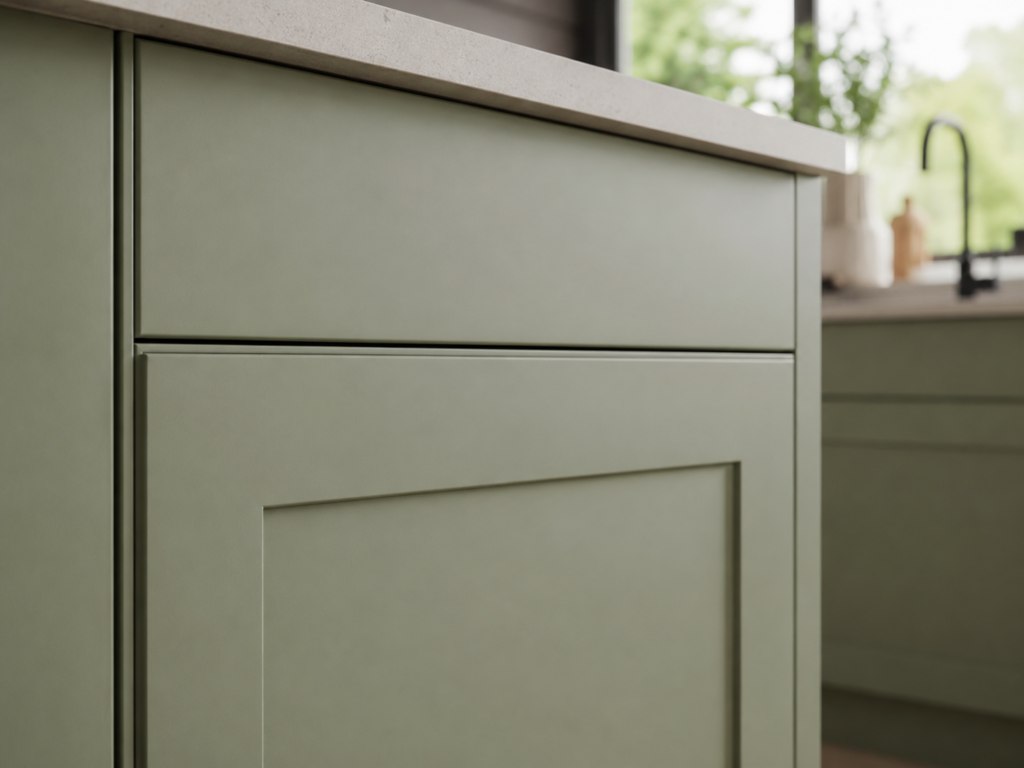
MDF is made by breaking wood down into fine fibers, mixing them with resin, and pressing them under heat into a dense, smooth board. It is popular because it takes paint and finishes beautifully, giving that flawless, factory-smooth look many homeowners want.
Pros of MDF
- Extremely smooth surface, ideal for painted and matte finishes
- Cuts cleanly with no splintering, great for detailed door profiles
- More budget-friendly than plywood or HPL
- Consistent density with no knots or grain irregularities
Cons of MDF
- Absorbs moisture if edges are not properly sealed
- Heavier than plywood, which can stress hinges over time
- Not ideal for areas directly exposed to water, like under-sink cabinets
- Swells and does not return to shape once water damage occurs
When Is MDF Best for Kitchen Cabinets?
MDF makes the most sense for upper wall cabinets, painted doors and drawer fronts, and decorative or end panels placed away from moisture. It is not the right pick for sink bases, dishwasher-adjacent units, or cabinet floors, since those spots see the most water exposure over time. If you are still weighing whether a custom layout or a ready-made setup suits your budget better, our earlier comparison on custom vs ready-made kitchen cabinets walks through that decision in more detail.
What Is Plywood?
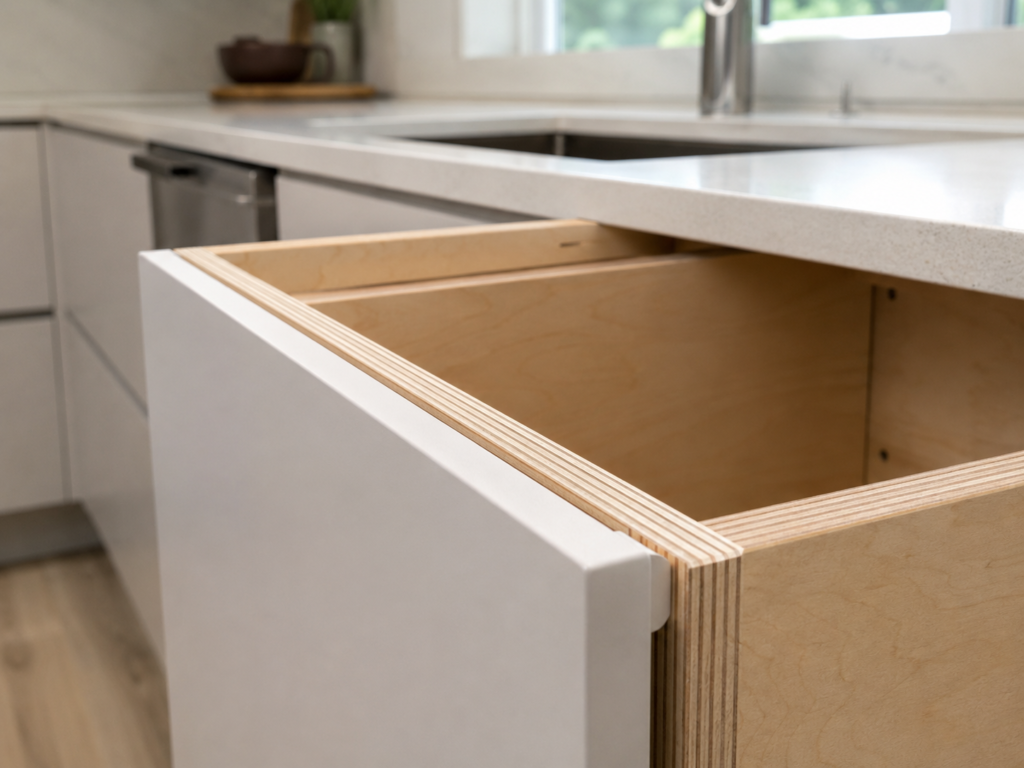
Plywood is built from thin layers of real wood veneer, glued together with each layer running in a different direction. This cross-grain construction is what gives plywood its strength and resistance to warping.
Pros of Plywood
- Strong resistance to warping and bending
- Handles humidity and moisture significantly better than MDF
- Holds screws and hinges more securely over years of use
- Longer lifespan for cabinet carcasses and shelving
Cons of Plywood
- Higher cost than MDF
- Surface can show grain lines under certain finishes
- Quality varies a lot between suppliers, so sourcing matters
- Edges need proper finishing to look polished
When Is Plywood Best for Kitchen Cabinets?
Plywood earns its place in cabinet boxes, base units, and anything sitting near a sink or dishwasher, where its layered construction resists warping far better than MDF. Marine-grade or BWR-grade plywood is worth the extra cost specifically in these high-moisture zones, since it holds up to steam and splashes without the delamination risk cheaper grades carry. Many premium builds pair a plywood carcass with a painted MDF or HPL front, giving you strength where it matters and a clean finish where it shows, a detail worth raising during any Kitchen Cabinet Design Dubai discussion with your contractor.
What Is HPL (High-Pressure Laminate)?
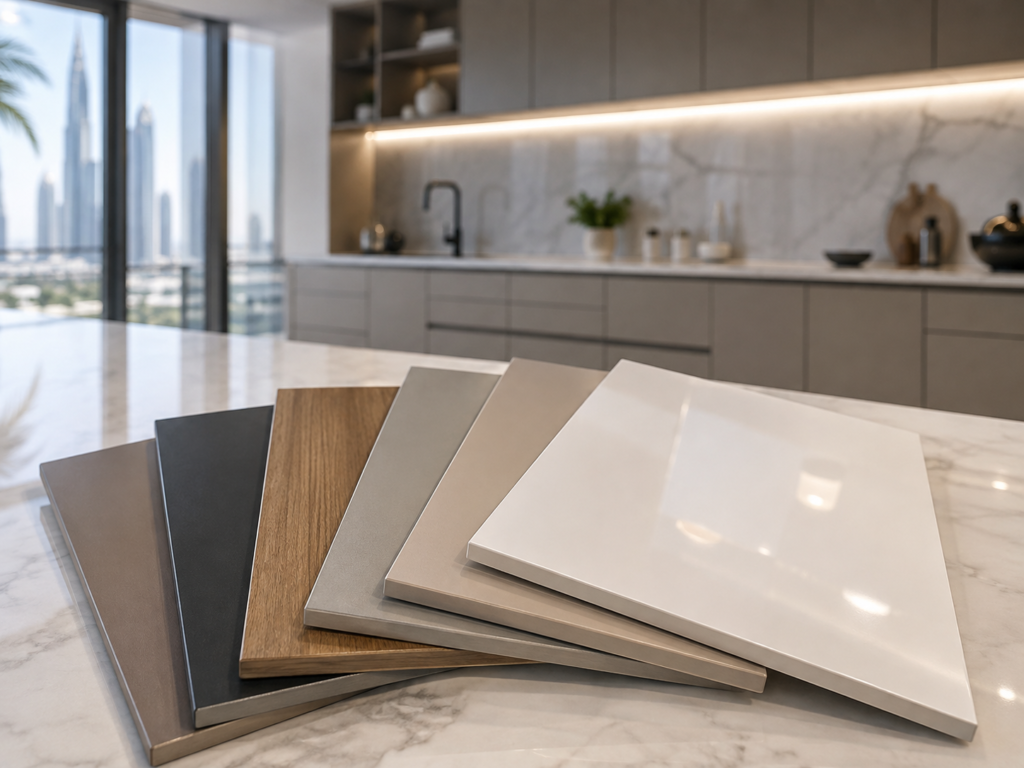
HPL is a durable surface layer made by fusing multiple sheets of resin-soaked paper under intense heat and pressure, then bonding it onto a substrate like plywood or MDF. It is not a core material on its own, it is a finish, but it plays a big role in how long your cabinets last and look good.
Pros of HPL
- Highly resistant to scratches, heat, and daily wear
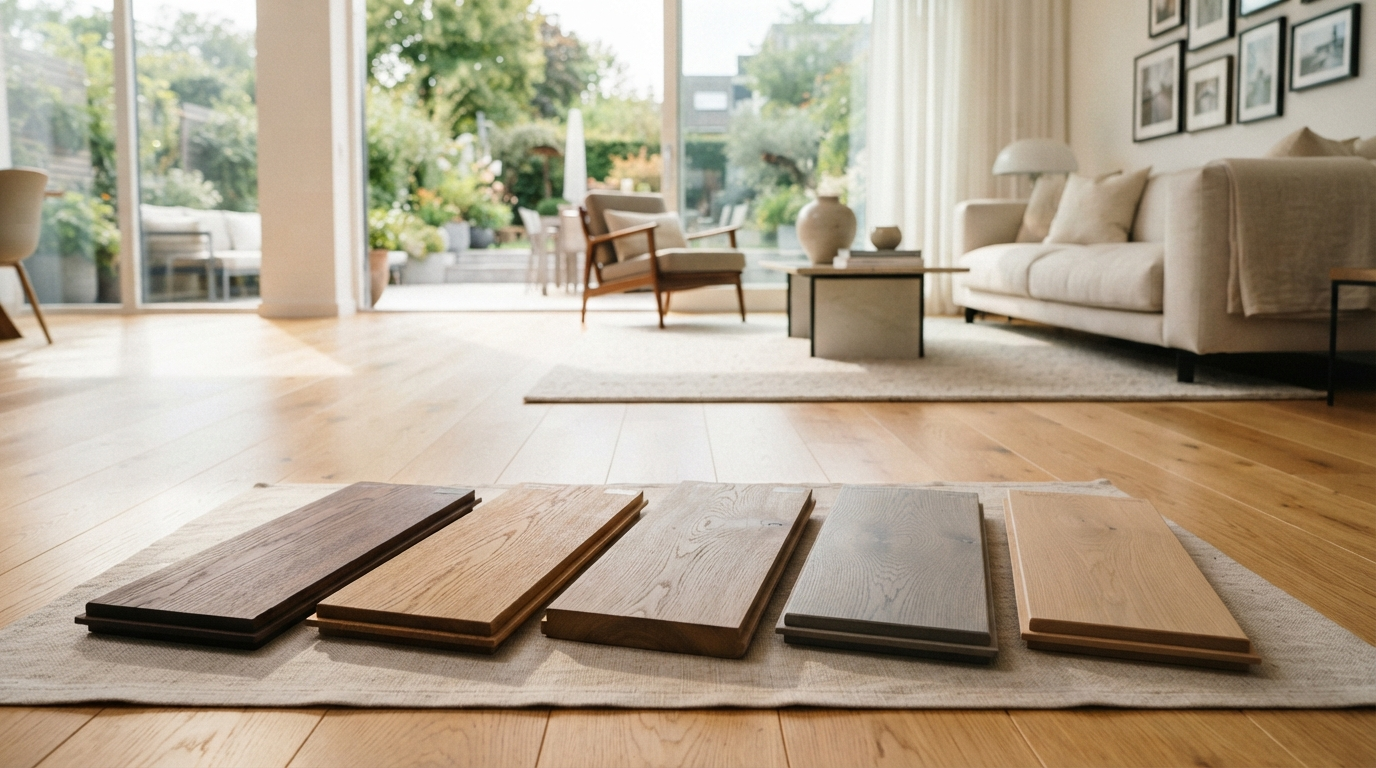
- Wide range of colors, textures, and finishes available
- Easy to wipe clean, ideal for busy family kitchens
- Performs well against Dubai’s humidity when applied correctly
Cons of HPL
- Edges can lift if installation quality is poor
- Repairs are harder since damage cannot be sanded and repainted
- Limited to flat or simple profile designs, not deep carvings
- Slightly higher cost when combined with a quality core board
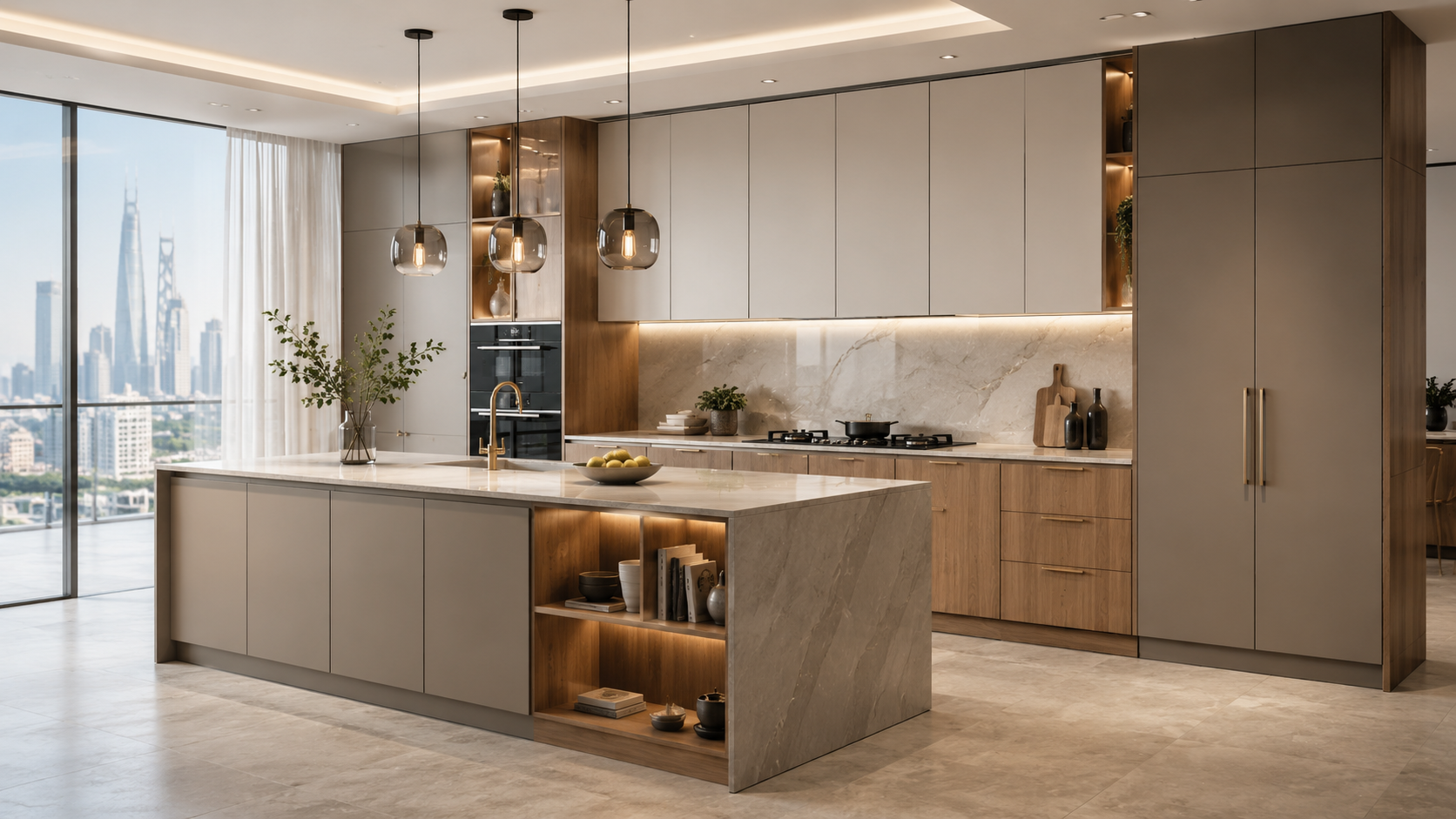
HPL earns its reputation in Luxury Kitchen Cabinets Dubai projects because it holds up to daily wear without constant touch-ups, though it does trade off some design flexibility compared to painted MDF profiles. For a visual sense of how these finishes look once installed, our roundup of modern kitchen cabinet designs for 2026 shows several real examples across different styles.
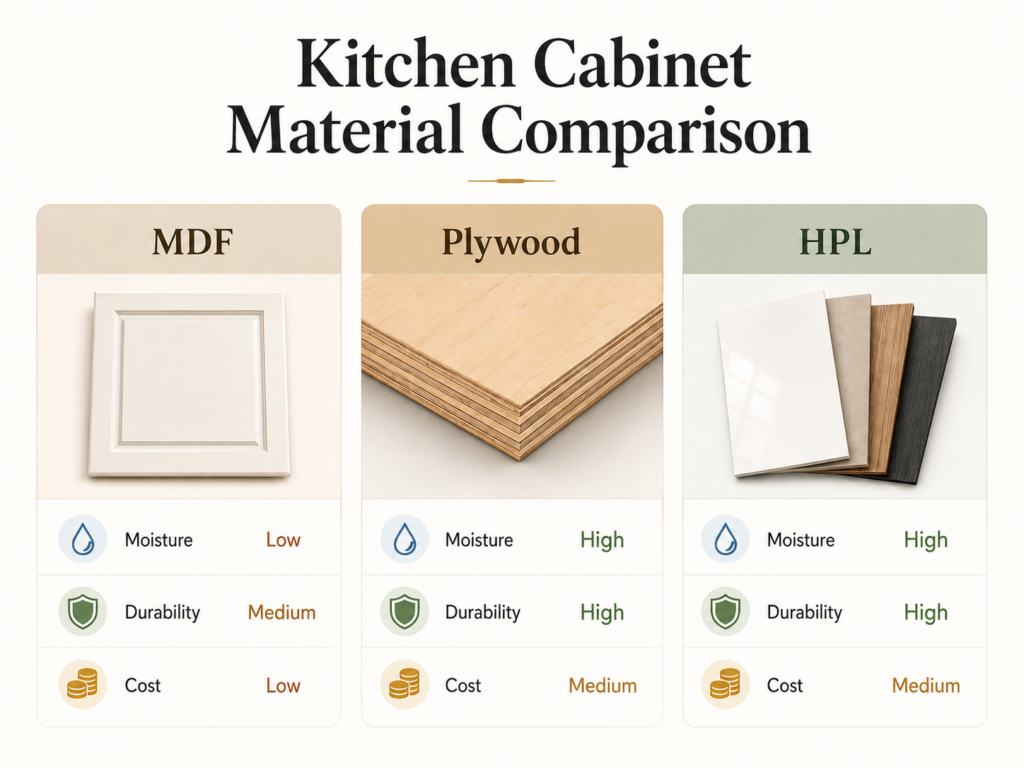
MDF vs Plywood vs HPL: Quick Comparison
| Factor | MDF | Plywood | HPL |
| Moisture resistance | Low to moderate | High | High |
| Durability | Moderate | High | Very high |
| Finish smoothness | Excellent | Good | Excellent |
| Cost | Budget-friendly | Mid to high | Mid to high |
| Best use | Painted doors, upper units | Cabinet boxes, base units | Wear-resistant surfaces |
None of these materials is objectively “better” across the board. Each one wins on a different factor, which is exactly why most well-built kitchens end up mixing materials instead of relying on just one.
Common Mistakes Homeowners Makes Choosing Kitchen Cabinet Material in Dubai
We see the same three mistakes repeatedly on renovation projects, no matter which material a client picks:
- Choosing the cheapest board without checking moisture rating. Saving AED 2,000 upfront often costs AED 10,000 in repairs within two years.
- Ignoring edge banding quality. Poor edge sealing is the number one reason MDF and plywood swell near sinks and dishwashers.
- Skipping professional installation. Even premium HPL panels fail early if the fitting and sealing during Kitchen Cabinet Installation Dubai is rushed.
Getting the material right is only half the job. Proper sealing, correct hardware, and precise installation are what actually determine how long any of these three materials last in a Dubai kitchen.
How to Decide What Fits Your Kitchen
Instead of picking a single “winner,” think about where each cabinet sits and how it gets used. Cabinets under a sink or beside a dishwasher benefit from plywood’s moisture resistance. Upper cabinets and painted fronts can lean on MDF’s smooth finish without much risk. High-traffic surfaces that get bumped, scratched, or wiped down daily do well with an HPL finish.
If you are mid-way through a full Kitchen Renovation Dubai project, it is worth asking your cabinet maker to break down material choice by zone rather than picking one board for the entire kitchen. At RAM Furniture, we manufacture our cabinets in-house, which means we control the quality of every board, every seal, and every finish that goes into a kitchen, rather than defaulting to whichever material happens to be cheaper that month.
You can see examples of MDF, plywood, and HPL cabinets in real Dubai homes in our portfolio, or contact us if you would like a straightforward, no-pressure breakdown of what fits your space and budget.
Frequently Asked Questions
Is MDF or plywood better for Dubai’s climate?
Neither is universally better. Plywood generally handles humidity better because of its cross-grain construction, which resists warping, making it a safer pick near sinks and wet zones. MDF works fine in dry, low-moisture areas of the kitchen and costs less, but it needs proper sealing to avoid swelling. Many kitchens use both, matched to the right zone.
Is HPL worth the extra cost over painted MDF?
It depends on your priorities. HPL resists scratches, heat, and stains better than painted MDF, which can chip or discolor with daily use, so it suits high-traffic households. Painted MDF still wins on design flexibility for detailed profiles and custom colors, so budget-conscious or design-focused homeowners may prefer it instead. See our Custom Kitchen Cabinets Dubai page for finish options.
Can I mix materials in one kitchen?
Yes, and it is actually the more common approach among well-planned kitchens. Many Dubai homes use plywood boxes for strength near wet areas and HPL or MDF finishes for the visible cabinet fronts, balancing cost, durability, and looks across different zones of the kitchen.
Which material is best for a budget kitchen renovation?
MDF with quality edge sealing offers the best balance of price and finish for budget-conscious projects, as long as it stays away from direct moisture exposure. Plywood costs more upfront but can reduce repair costs over time, so it is worth comparing both against your long-term budget.
How long do these materials typically last in Dubai homes?
Well-sealed MDF can last 8 to 12 years away from moisture. Plywood cabinets often reach 15 to 20 years with proper care. HPL-finished surfaces can outlast both in scratch and stain resistance, though the core board underneath still determines overall lifespan. Our team at RAM Furniture can walk you through expected lifespan during a Kitchen Cabinet Design Dubai consultation.