
Quick Overview: What You’ll Walk Away Knowing
- A good media wall does more than hide a TV, it sets the tone for the whole living room.
- The five styles below range from minimal and floating to bold, textured, and lit up.
- Each one suits a different room size, lighting setup, and daily lifestyle, so there’s no single “best” pick.
- Cable management and proportion mistakes are what make most DIY media walls look off.
- Ram Furniture designs and builds custom media wall in Dubai projects tailored to your actual space, not a generic template.
Most people don’t think about their TV wall until they’re sitting across from it every single evening, staring at tangled cables and a unit that never quite matched the rest of the room. That was exactly the situation a client of ours described a while back: a perfectly nice living room, ruined by a mismatched console table doing double duty as a TV stand. It wasn’t broken, it just never looked finished.
That gap between “functional” and “finished” is where media wall designs earn their reputation. A well planned media wall pulls a room together in a way a standalone TV unit rarely can. At Ram Furniture, we design and build custom media wall in Dubai projects for homes across the city, and we’ve seen firsthand which layouts hold up to daily life and which ones look great in a render but fall apart in practice.
This article walks through five real design directions worth considering, along with what actually makes each one work once the furniture, lighting, and daily clutter of real life get added back into the picture.
Why Your Living Room Deserves More Than a Basic TV Unit
A television is usually the visual anchor of a living room whether people plan it that way or not. Everyone’s eyes land there eventually, which means the wall around it either supports the room or quietly works against it.
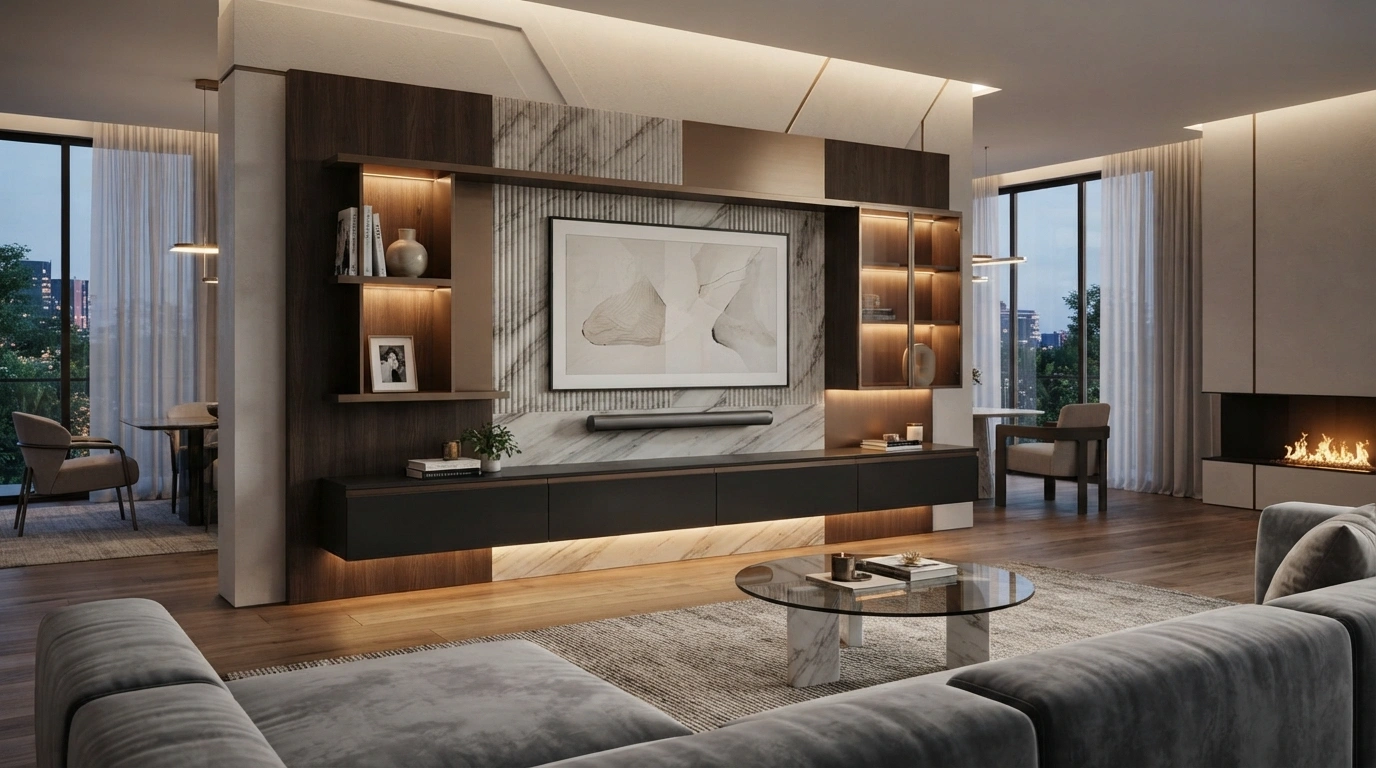
A thoughtfully built Living Room Media Wall does three things at once. It hides the mess of cables and consoles, it adds storage or display space without eating into floor area, and it gives the room a focal point that feels intentional rather than accidental.
What Actually Counts as a Media Wall
Before comparing styles, it helps to know what falls under this category. A media wall typically includes:
- A mounting surface or recess built for the TV itself
- Integrated or concealed cable management
- Storage for consoles, routers, and media devices
- Shelving or display niches for decor and books
- Lighting, whether ambient, accent, or both
Not every media wall needs all five elements. The right combination depends on the room, the furniture around it, and how the space actually gets used day to day. If you want a deeper breakdown of these elements before picking a style, our earlier guide on how to design the perfect media wall for any space covers the planning side in more detail.
5 Modern Media Wall Designs Worth Considering
Here’s where things get interesting. Each of these directions solves a different problem, so read them with your own room in mind rather than picking whichever looks trendiest.
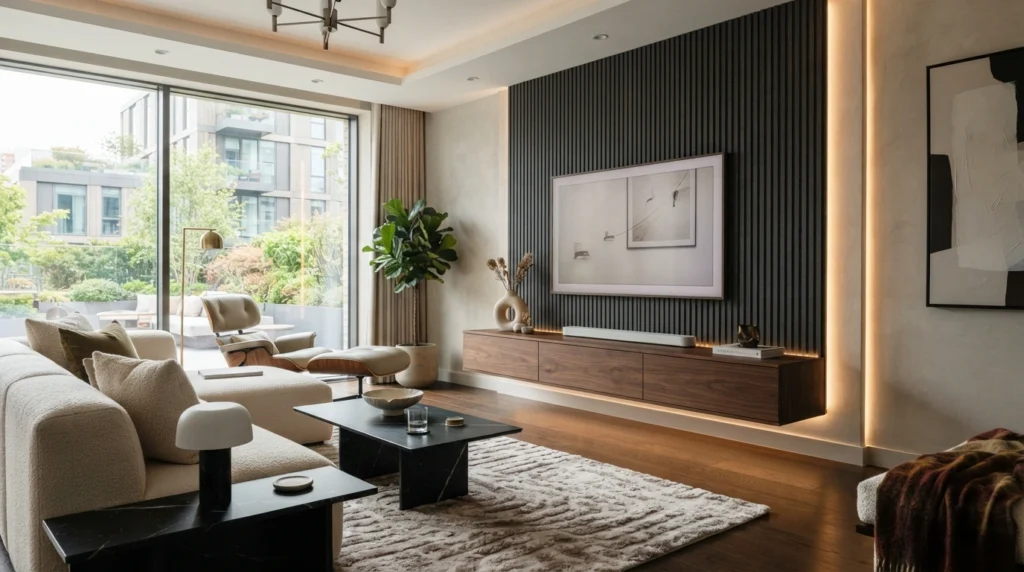
1. The Floating Minimalist Wall
This is the cleanest option on the list. A slim floating console sits below a recessed or surface mounted TV, with no visible legs or bulky cabinetry weighing down the wall. It works especially well in smaller living rooms where floor space matters.
The trade-off is storage. A floating minimalist wall looks fantastic, but it doesn’t hold much, so it suits households that don’t need to store a lot of media equipment or clutter.
2. The Fluted Panel Statement Wall
Fluted wood panels have become one of the most requested looks in Modern Media Wall Design over the past couple of years, and for good reason. The vertical grooves add texture and depth without relying on color or ornamentation, which makes the wall feel high end even in a neutral palette.
This style pairs well with warm lighting and works in both compact apartments and larger villas, since the texture reads well at almost any scale.
3. The Backlit LED Accent Wall
This is the boldest option, and it tends to be the one people either love immediately or want to tone down. A recessed TV niche or shelving unit gets framed with hidden LED strips, creating a soft glow that changes the entire mood of the room after dark.
It’s a striking choice for anyone who entertains often or simply wants their living room to feel a little more dramatic in the evenings. It does require more electrical planning than the other styles, so it’s worth discussing early with whoever is handling the installation.
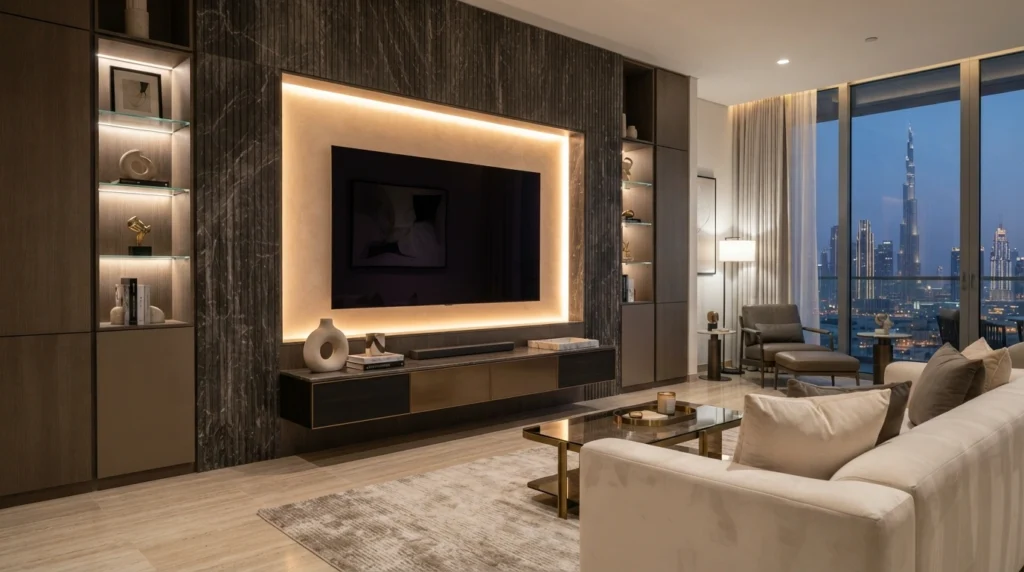
4. The Stone or Marble Clad Wall
For a heavier, more permanent feeling design, stone or marble effect cladding brings a sense of weight and luxury that wood and paint simply can’t match. This style tends to work best as the true centerpiece of the room, often paired with a simpler, more restrained furniture selection around it.
It’s a more premium investment than the other four options, but for larger living rooms with high ceilings, it can genuinely transform the entire space.
5. The Mixed Storage and Open Shelving Wall
This design leans practical without sacrificing style. A combination of closed cabinetry for equipment and open shelving for books, decor, or a speaker system, this option suits families who need the media wall to actually work hard, not just look good.
It’s the most flexible of the five, since the mix of storage types can be adjusted to match exactly how much clutter needs a home.
Comparing the Five Styles at a Glance
| Design Style | Best For | Storage Level | Maintenance |
| Floating Minimalist | Small to medium rooms | Low | Low |
| Fluted Panel | Most room sizes | Medium | Low to medium |
| Backlit LED Accent | Rooms used for entertaining | Medium | Medium |
| Stone or Marble Clad | Large, high ceiling rooms | Low to medium | Low |
| Mixed Storage and Open Shelving | Families, media heavy households | High | Medium |
None of these designs is objectively better than the others. The right pick depends on your room’s proportions, how much you need to store, and how bold you want the final look to feel.
Custom Build or Off the Shelf Unit: Weighing It Out
Pros of a custom Media Wall Designs:
- Built to fit your exact wall dimensions and TV size
- Cable management planned in from the start, not added later
- Matches existing furniture, flooring, and color palette
- Can combine storage, lighting, and display in one cohesive piece
Cons of a custom Media Wall Designs:
- Takes longer to plan and install than buying a ready-made unit
- Generally a bigger upfront investment than an off the shelf TV console
- Requires more coordination if lighting or electrical work is involved
For a rental property or a short-term setup, an off the shelf unit can still make sense. For a home you plan to stay in and actually enjoy, a custom TV Media Wall Dubai build tends to earn back its cost in how much better the room feels every single day.
Common Mistakes That Ruin an Otherwise Great Media Wall
Even good design ideas fall apart in execution if a few basics get skipped.
- Ignoring cable management until the end. Cables should be planned before installation, not patched in afterward with clips and covers.
- Mounting the TV at the wrong height. Eye level while seated should guide the placement, not the center of the wall.
- Choosing a design that overwhelms the room. A bold accent wall in a small space can make the room feel smaller, not more impressive.
- Skipping proper lighting planning. Ambient and accent lighting change the entire mood of a media wall, and retrofitting it later is far more disruptive than planning it upfront.
- Underestimating storage needs. A media wall that looks sleek but can’t hold everyday equipment usually gets cluttered again within months.
How Ram Furniture Approaches Custom Media Walls
Every project starts with the room itself, not a catalog page. Our team measures the actual space, discusses how the room gets used day to day, and designs a wall that fits both the lifestyle and the layout, whether that’s a minimalist floating console or a full stone clad statement piece.
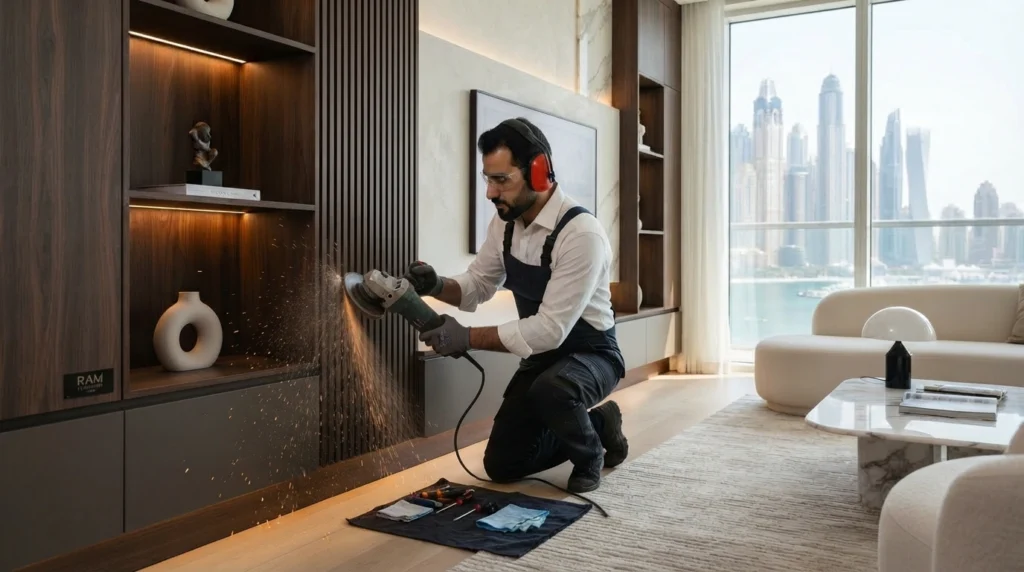
You can browse completed projects on our portfolio page to see these five styles, and a few others, built out in real Dubai homes. To learn more about the people behind the work, our about us page covers how the team approaches custom furniture design from concept to installation.
Bringing These Ideas Into Your Own Living Room
Five different directions, five different moods, and honestly, most homeowners find their answer somewhere in between two of these styles rather than picking one outright. That’s normal, and it’s exactly why a custom approach tends to work better than a fixed, one size fits all unit.
A well designed media wall isn’t just about the television. It’s about how the whole room feels once the clutter disappears and everything finally has a place. If your living room still feels unfinished the way that first client’s did, this is usually the fix that changes the whole picture.
Ready to Design Yours?
If any of these five styles caught your eye, the next step is simple. Reach out through our contact us page to start the conversation, and our team will walk you through material samples, layout options, and a clear timeline built around your exact room, not a generic template pulled off a shelf.
Frequently Asked Questions (What People Actually Ask)
How much does a custom media wall cost in Dubai?
Pricing depends on materials, size, and features like lighting or integrated storage, so costs vary widely between a simple floating console and a full stone clad statement wall. A tailored quote after seeing the room is always more accurate than a flat estimate.
How long does it take to install a media wall?
Most custom media wall projects take anywhere from a few days to a couple of weeks, depending on complexity, materials, and whether electrical or lighting work is involved.
Can a media wall include storage for a games console or router?
Yes, most modern media wall designs build in closed cabinetry or vented compartments specifically for media equipment, keeping devices out of sight while still allowing proper airflow.
What materials are commonly used in media wall designs?
Popular choices include wood veneer, fluted panels, stone or marble effect cladding, and painted MDF, often combined with metal or LED lighting accents depending on the style.
Can an existing TV unit be upgraded into a full media wall?
In many cases, yes. An existing unit can sometimes be built around or replaced with a wall mounted design that adds storage, lighting, and a cleaner finish without a full room renovation.