
Homeowners across Dubai say the same thing after moving in: “It felt so much bigger in the showroom.” Nine times out of ten, the culprit isn’t the sofa or the paint colour, it’s the TV unit design. Over two decades of building furniture for homes across the UAE, our team at RAM Furniture has seen the same layout mistakes repeated in apartment after apartment, villa after villa.
Quick answer: Simple errors like choosing an oversized console, mounting the TV too high, ignoring floor clearance, and cluttering open shelves are what make a living room feel cramped. Fixing these, usually with a slimmer or floating unit scaled correctly to the wall, is often enough to make the room feel larger again.
If you’re already planning a unit for your space, browsing a custom tv unit in Dubai is worth doing before you commit to a size or style, since made-to-measure pieces avoid most of these issues from the start.
Common TV Unit Design Mistakes and How to Fix Them
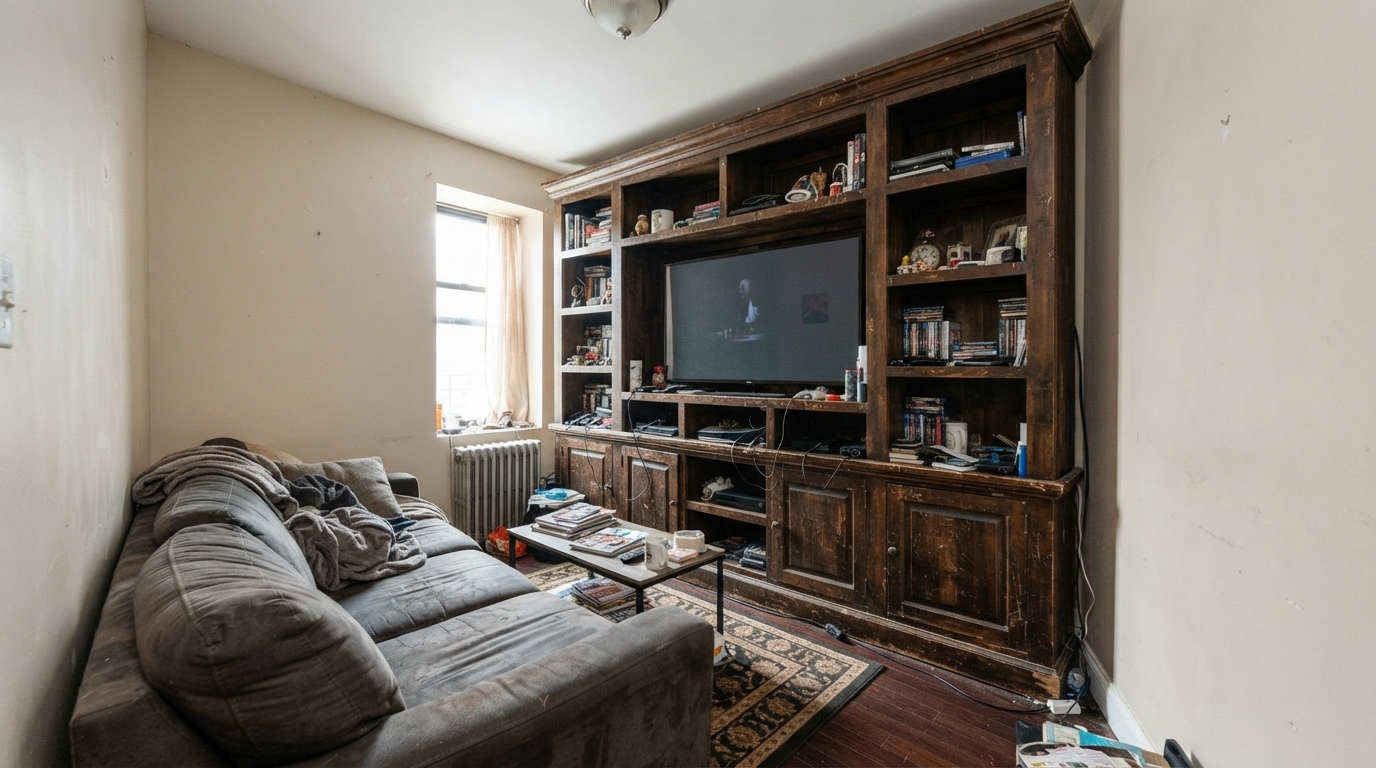
- Bulky or Heavy Console: A deep, solid cabinet with thick legs blocks floor space and adds visual weight to the wall. Fix: Choose a slimmer profile or a raised unit that lets light pass underneath.
- Wrong Wall Proportions: A unit that’s too narrow leaves awkward gaps, while one that spans wall-to-wall feels heavy. Fix: Scale the unit to roughly two-thirds of the wall width.
- Skipping Storage Planning: Without enough closed storage, remotes, cables, and boxes pile up around the unit. Fix: Build in closed compartments sized for what you actually own.
- Overcrowded Open Shelving: Shelves packed with books, frames, and ornaments create visual clutter fast. Fix: Style shelves with restraint and leave some open, empty space.
- Poor Lighting on the TV Wall: A dark, shadowed wall flattens the whole space. Fix: Add soft ambient or strip lighting behind or around the unit.
- Ignoring Floor Clearance: A cabinet sitting flat on the ground blocks the floor line and shrinks the room’s footprint. Fix: Mount it 4 to 8 inches above the floor for a lighter, floating look.
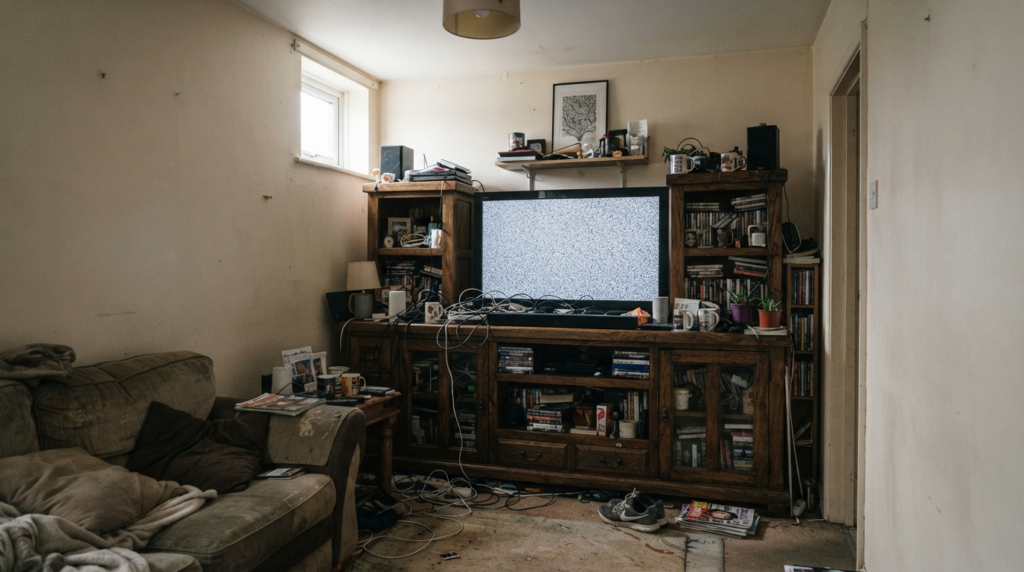
Why TV Unit Design Has Such a Big Impact on Room Size
The TV unit is usually the largest single piece of furniture on the main wall of a living room. Its scale, colour, and placement set the tone for the entire space.
Get the proportions wrong, and even a large living room can feel cramped. Get it right, and a modest sized room can feel airy and open. This is why tv unit design deserves more thought than most people give it.
Floating vs Cabinet Style TV Units: A Fair Comparison
One of the most common questions we get is whether a raised, floating unit or a traditional floor-standing cabinet works better in a smaller room. Honestly, it depends on the household.
A Floating TV Unit Dubai homeowners often choose works well in apartments where floor space is tight, since it visually lifts the unit off the ground. A grounded TV Cabinet Dubai buyers tend to suit villas that need heavier storage for larger families.
| Feature | Floating TV Unit | Floor-Standing Cabinet | Media Wall Unit |
| Visual weight | Lighter, appears to float | Heavier, more grounded | Varies, blends into wall |
| Storage capacity | Moderate | Higher, deep drawers | High, fully integrated |
| Best suited for | Apartments, smaller rooms | Villas, larger families | Any room needing a focal wall |
| Installation | Needs secure wall mounting | Simple floor placement | Requires planning and wiring |
Pros and Cons of Each Style
Floating Units
- Pros: Creates an open, airy feel; easier floor cleaning; modern look
- Cons: Limited weight capacity; needs professional wall mounting
Floor-Standing Cabinets
- Pros: More storage; sturdy; no wall damage risk
- Cons: Can look heavy in small rooms; harder to clean underneath
Media Wall Units
- Pros: Combines storage, shelving, and TV mounting into one cohesive wall; hides cables neatly
- Cons: Higher upfront cost; needs careful planning to avoid overcrowding
Neither option is universally better, it comes down to storage needs, wall strength, and how the rest of the room is furnished. If you want inspiration on this, our post on 7 TV Wall Panel Designs Trending in Dubai Homes shows how panelling can add depth without bulk.
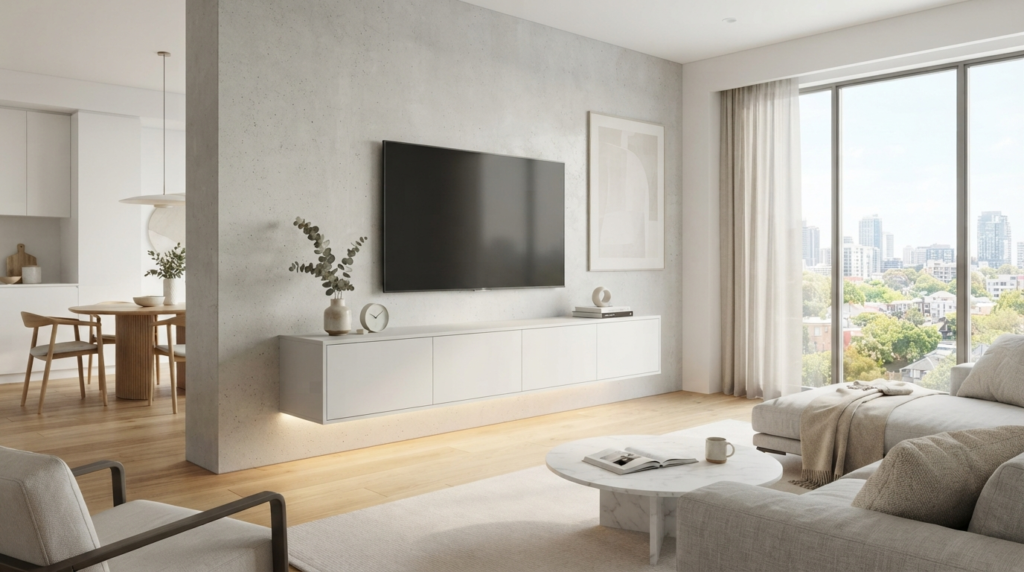
How the Right Design Choices Open Up a Room
A Modern TV Unit Dubai homeowners are increasingly asking for trends to favour slim profiles, matte finishes, and integrated lighting. These choices reduce visual bulk and let the wall breathe.
A well-planned Media Wall TV Unit often solves the small-room problem better than a standalone piece, since it’s built into the wall’s proportions rather than sitting apart from them. Small home offices face similar layout challenges, and our guide on Best Office Media Wall Design Ideas for Modern Dubai Workspaces covers many of the same space-saving principles.
If you’re unsure what will actually work for your wall and room shape, browsing real examples helps more than theory. Our portfolio has a range of completed projects across Dubai apartments and villas that show these principles in action.
Wrapping It Up
Your TV unit shouldn’t be the reason your living room feels smaller than it is. A thoughtful tv unit design that matches your wall proportions, storage needs, and lighting can transform how the whole space feels, without any structural changes to the room itself.
If you’re ready to plan a unit that actually fits your space, get in touch with our team through the Contact Us page and we’ll walk you through options built around your room, not a generic template.
Frequently Asked Questions
What size should a TV unit be for a small living room?
Aim for a unit that’s about two-thirds the width of your TV wall, not the full length. This leaves breathing room on either side and keeps the wall from feeling boxed in.
Are floating TV units better for small rooms?
Floating units often work well in smaller spaces because they expose floor area underneath, which tricks the eye into seeing more room. That said, they need secure wall mounting and aren’t ideal for every wall type.
What is the best colour for a TV unit in a small room?
Lighter, neutral tones generally help a TV unit blend into the wall rather than stand out as a heavy block. Darker finishes can still work if paired with good lighting.
Should a TV unit have open or closed storage?
Closed storage tends to keep a small room looking tidier since it hides cables, remotes, and everyday clutter. Open shelving works too, but only with restrained, minimal styling.
How much space should be left between the sofa and the TV unit?
Most designers recommend keeping at least 2 to 2.5 metres of clearance for comfortable viewing and easy movement, though this varies with room size and TV dimensions.