
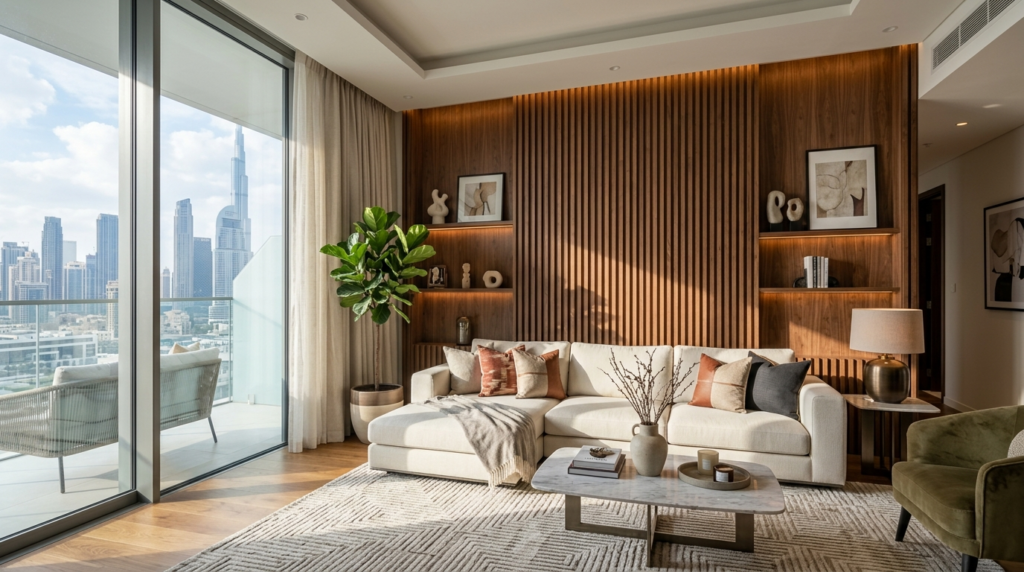
Quick Answer: These 5 wall panel designs Dubai homeowners ask for most are:
- Wooden Wall Panels – warm, natural texture for living rooms and bedrooms
- 3D Decorative Panels – bold geometric texture for statement walls
- TV Wall Panels – media walls with hidden wiring and built-in lighting
- Fabric-Upholstered Panels – soft, sound-absorbing finish for bedrooms and theatres
- Mixed-Material Panels – wood, stone-effect and metal combined for open-plan spaces
Each brings a different mood, budget and maintenance level, so the right pick depends on the room, the lighting and how much upkeep you want to deal with.
RAM Furniture has worked with a lot of Dubai homeowners over the years, and the complaint is almost always the same: the walls feel flat, painted or tiled with nothing to draw the eye. That’s usually when clients start asking about wall panel designs, because a good panel adds texture, shadow and depth in a single afternoon.
It’s one of the most requested upgrades we handle, and it can turn a plain living room into a focal point without a full renovation. If you’re leaning toward this upgrade, our Wall Panels Dubai has more on the materials and finishes we install.
Below are five panel styles that consistently deliver a noticeable upgrade, along with the honest pros and cons of each so you can match the right one to your space.
1. Wooden Wall Panels
Wood is the design most people picture first when they hear “feature wall,” and for good reason. Wooden Wall Panels Dubai homeowners choose most often come in warm oak, walnut or teak tones, and they instantly soften a room that feels too clinical or cold.
They work especially well in living rooms, bedrooms and home offices where you want a cosy, grounded feel.
Pros:
- Warms up a room without needing extra lighting
- Pairs well with almost any furniture style
- Naturally hides small wall imperfections
Cons:
- Needs occasional dusting and polishing to keep the finish fresh
- Solid wood options can be more expensive than engineered alternatives
- Humidity in some homes can affect certain wood types over time
2. Decorative 3D Wall Panels
If wood is about warmth, this category is about drama. Decorative Wall Panels Dubai designers use in statement spaces often rely on 3D geometric textures, molded patterns or fluted surfaces that catch light differently depending on where you’re standing.
These panels are popular in entryways, dining rooms and feature walls behind sofas, where the goal is to create a strong first impression.
Pros:
- Creates visible depth and shadow play under the right lighting
- Available in countless pattern options to suit different styles
- Doesn’t require artwork or accessories to look finished
Cons:
- Can feel overwhelming in smaller rooms if overused
- Some textured finishes collect dust in the grooves
- Harder to repaint or change later without redoing the whole wall
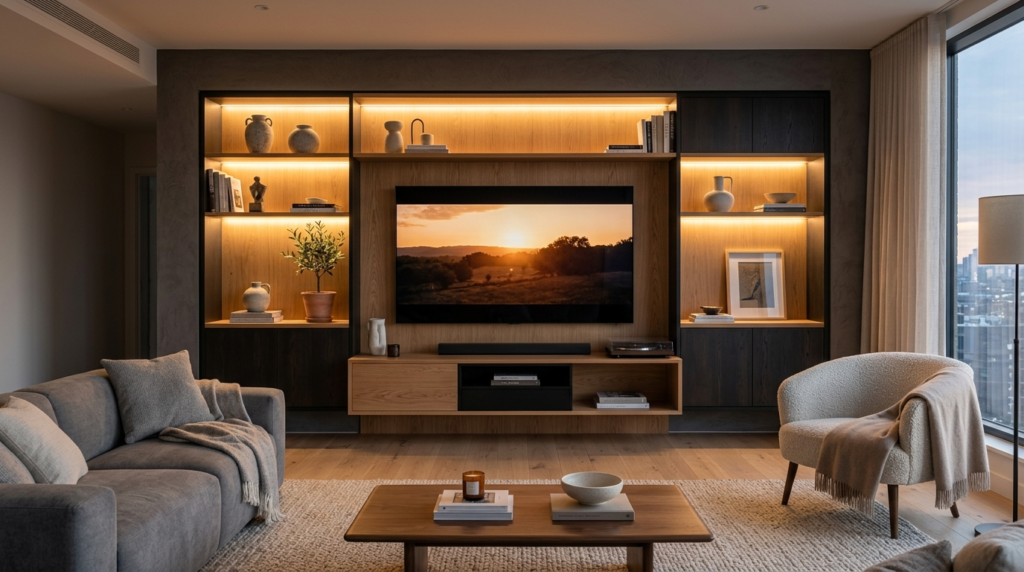
3. TV Wall Panels
This is arguably the most requested design category today. TV Wall Panels Dubai clients ask for usually combine a media wall with integrated shelving, ambient lighting and sometimes a fireplace insert, turning the television into part of the design rather than an afterthought bolted to a bare wall.
Pros:
- Hides cables and wiring for a cleaner look
- Adds functional storage alongside the visual upgrade
- Works well with LED strip lighting for evening ambience
Cons:
- Requires more planning around electrical points and cable routing
- Custom builds take longer to design and install than a simple panel wall
- Changing your TV size later may mean adjusting the panel layout
4. Fabric-Upholstered Wall Panels
Upholstered panels bring a softer, more tactile feel to a room, and they’re a favourite for bedrooms and home theatres where sound absorption matters. Instead of wood or stone textures, these panels use padded fabric in geometric or channel-tufted patterns.
Pros:
- Adds a plush, hotel-style finish to a bedroom or lounge
- Helps absorb sound, which is useful in home theatres
- Comes in a wide range of colours and fabric grades
Cons:
- Fabric can stain or fade near direct sunlight
- Not ideal for high-traffic areas like hallways
- Cleaning requires more care than a hard-surface panel
5. Mixed-Material Interior Wall Panels
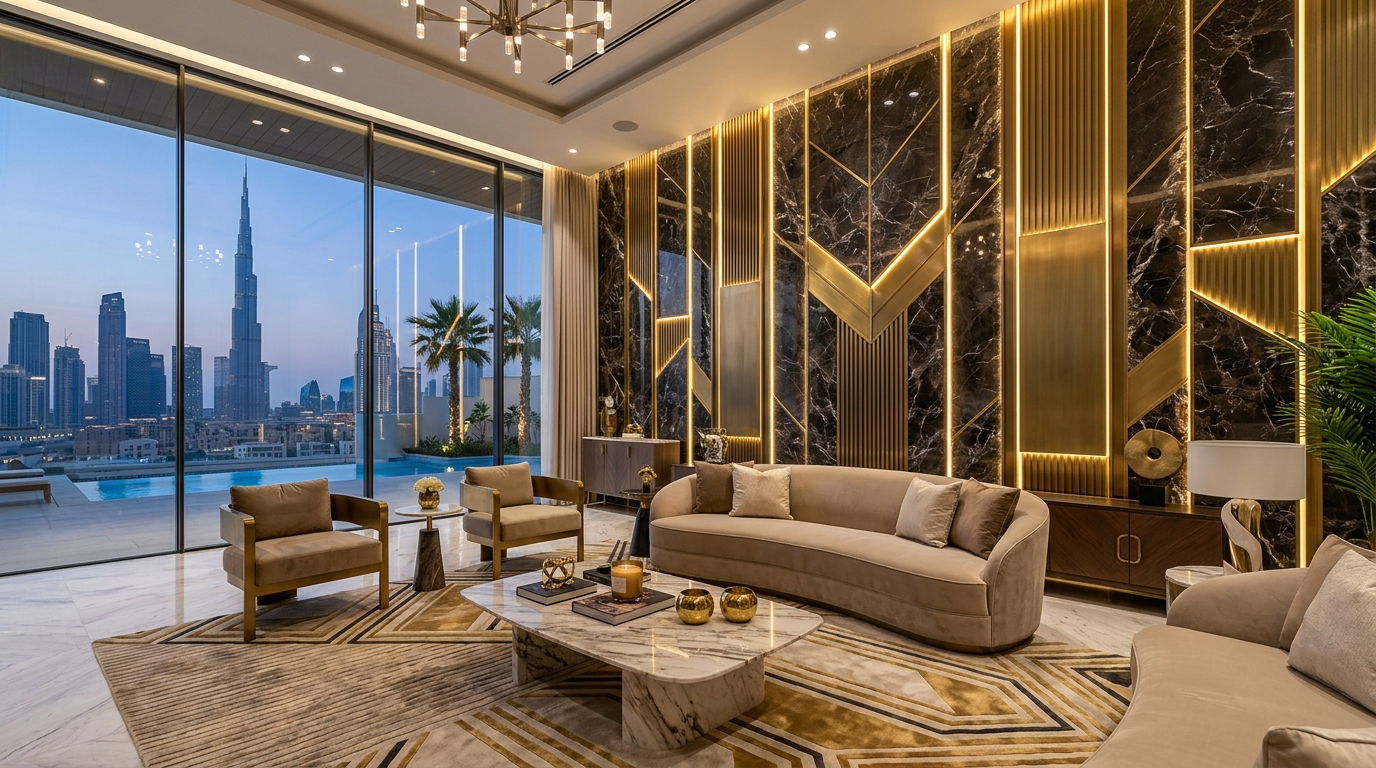
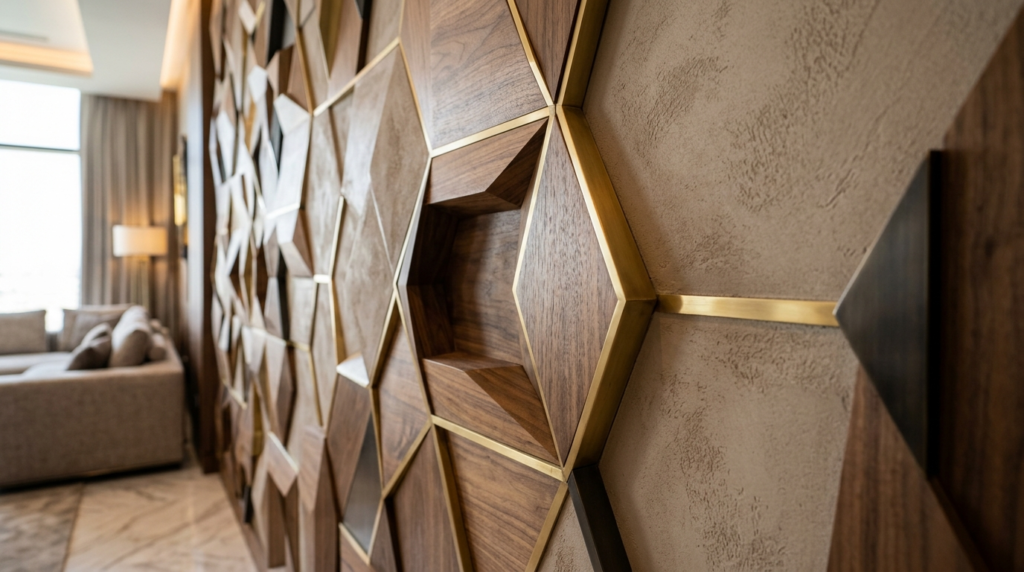
Sometimes one material isn’t enough to tell the story a client wants. Interior Wall Panels Dubai homes increasingly feature combine wood, stone-effect laminate and metal trims in a single wall, giving designers more flexibility to match a specific theme.
This approach suits open-plan living areas where the panel wall needs to visually connect a few different design elements in the home.
Pros:
- Highly customisable to match existing decor
- Can balance warmth (wood) with structure (stone or metal accents)
- Tends to feel more unique than a single-material wall
Cons:
- Generally the most expensive option due to combined materials
- Installation takes longer and needs more precise planning
- Repairs can be trickier if only one material is damaged
Comparing the Five Panel Styles
| Panel Type | Best For | Maintenance Level | Typical Budget |
| Wooden Panels | Living rooms, bedrooms | Low to moderate | Mid-range to high |
| 3D Decorative Panels | Entryways, statement walls | Low | Mid-range |
| TV Wall Panels | Living rooms, media walls | Moderate | Mid-range to high |
| Fabric-Upholstered Panels | Bedrooms, home theatres | Moderate to high | Mid-range |
| Mixed-Material Panels | Open-plan living areas | Moderate | High |
None of these is objectively “the best.” A wooden panel in a small apartment can look just as impressive as a mixed-material wall in a villa. It really comes down to the room’s purpose, natural light and how much maintenance you’re comfortable with.
Common Mistakes to Avoid With Wall Panel Designs
A few issues come up again and again, no matter which style a client leans toward.
- Choosing a panel before checking the lighting. Textured panels rely on shadow, and a wall with poor lighting can end up looking flat despite the extra cost.
- Covering an entire room in panels. One feature wall usually has more impact than four matching walls, which can feel heavy.
- Ignoring scale. Large, bold patterns can overwhelm a small room, while tiny details get lost on a large wall.
- Skipping proper measurements before ordering. Panels that don’t align with switches, vents or doorframes look unfinished no matter how nice the material is.
- Forgetting long-term maintenance. Fabric and certain woods need more care than laminate or stone-effect finishes, so it’s worth asking about upkeep before you commit.
If you’re unsure which direction fits your space, browsing real installations helps more than any description can. Our portfolio has examples across different room types and budgets, which is often the fastest way to narrow things down.
Ready to Upgrade Your Walls?
A flat wall is easy to ignore, but a well-designed panel wall is the kind of detail guests notice the moment they walk in. Whether you’re drawn to warm wood tones, a bold 3D pattern, or a media wall built around your TV, the right choice comes down to matching the design to how you actually use the room.
If you want a second opinion on what would work best in your space, our team at RAM Furniture is happy to walk through options with you. Contact us to arrange a consultation, or take a look at our Wall Panels Dubai page for a closer look at materials, finishes and past projects.
FAQs
1. What is the most popular wall panel design in Dubai homes right now?
TV wall panels and wooden slat panels tend to be the most requested, largely because they suit both modern and traditional interiors without needing a full renovation.
2. Are wall panels expensive to install?
Cost varies widely based on material. Laminate and engineered wood panels are generally more affordable, while solid wood or mixed-material designs sit at the higher end. You can see cost-relevant examples on the Wall Panels Dubai service page.
3. Do wall panels work in small rooms?
Yes, as long as the scale of the pattern matches the room. Smaller, simpler textures usually work better in compact spaces than large, heavily textured panels.
4. How long does wall panel installation take?
A single feature wall typically takes a day or two, though mixed-material or custom TV wall builds can take longer depending on electrical and structural work involved.
5. Can wall panels be removed or changed later?
Most panel systems can be removed, though the wall underneath may need patching or repainting afterward, especially with adhesive-mounted panels.
6. Do wall panels need special maintenance?
It depends on the material. Wood needs occasional polishing, fabric needs gentle cleaning and protection from direct sun, while laminate and stone-effect panels are generally low maintenance.